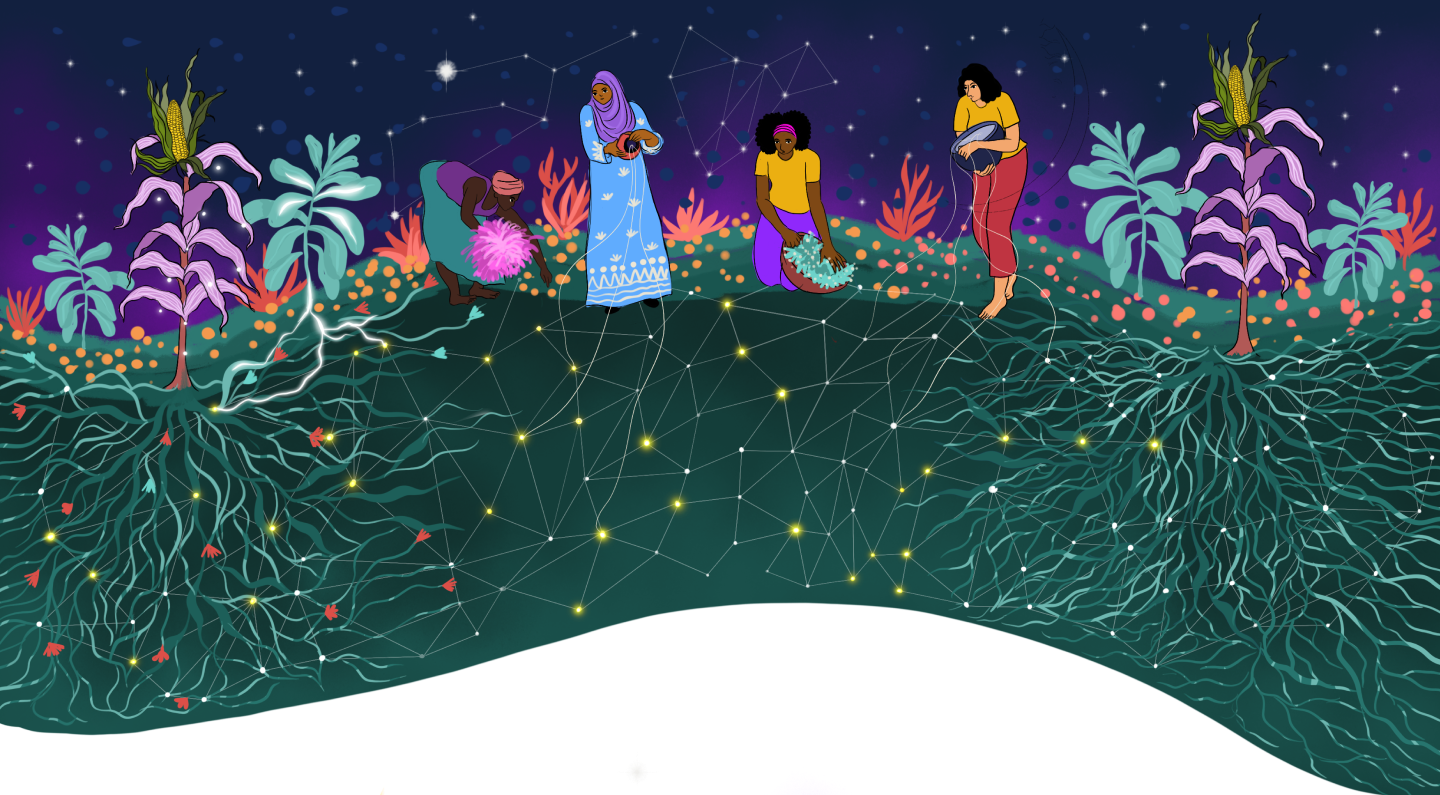
Standing Strong: Global Voices Unite for Women Human Rights Defenders
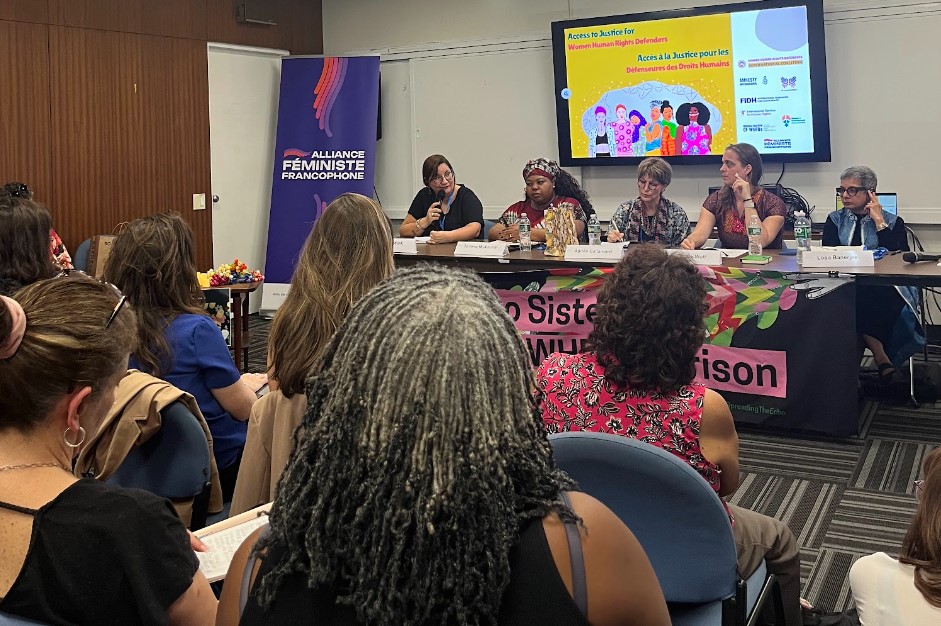
The Women Human Rights Defenders International Coalition, together with its members and partners, convened a parallel event entitled “Access to Justice for Women Human Rights Defenders” on March 10, in the frames of the 70th session of the Commission on the Status of Women.
Organized in the context of growing global attacks and reprisals against women human rights defenders (WHRDs), the event brought together activists, advocates, and international organizations for a timely and urgent discussion.
The session offered a cross-regional and intersectional analysis of the challenges WHRDs face in accessing justice. The WHRDIC started the event by remembering WHRDs currently imprisoned for their human rights work, as well as those who were not able to or refused to travel to NYC because of visa restrictions and restrictive policies of the United States. Attendees also commemorated the prominent Iraqi feminist leader Yanar Mohammed, who was assassinated on March 2 in her home in Baghdad in what appears to have been a targeted militia attack.
Speakers highlighted the structural barriers that continue to hinder accountability, emphasizing how women defenders are often criminalized, harassed, and silenced due to their activism in various political and social contexts.
The discussion featured prominent speakers, including Agnès Callamard, Secretary General of the Amnesty International, alongside Emilie De Wolf, Advocacy Co-coordinator at IM-Defensoras, Amel Hadjadj representing Journal féministe algérien and the Alliance féministe francophone, and Tatiana Mukaniré from the SEMA network. A special contribution was delivered by Lopa Banerjee, Director of the Civil Society Division at UN Women.
The panel opened with a critical reflection on the current global context offered by Lopa Banerjee and Agnès Callamard. The discussion focused on the multilateral system and the growing backlash against gender equality, bodily autonomy, and universal human rights.
Across UN spaces - including the Commission on the Status of Women, treaty bodies, negotiations on Special Rapporteur mandates, and humanitarian coordination mechanisms - panelists noted increasing obstruction, politicized procedural tactics, and the strategic capture of processes by anti-rights actors. In this context, the panel explored what actions are needed to protect, disrupt, and transform the multilateral system in order to counter these attacks and sustain human rights protections.
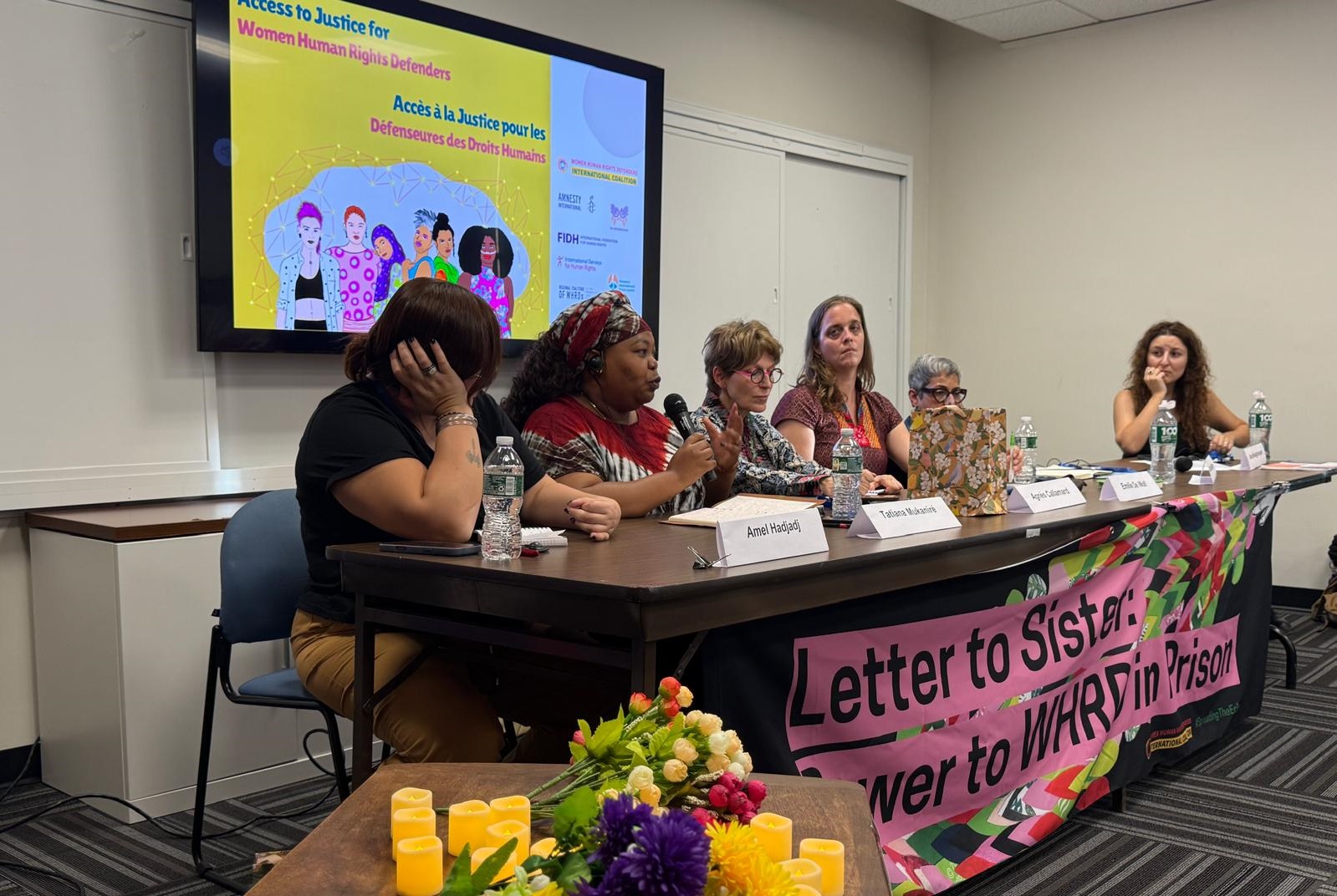
Building on this global framing, the conversation shifted to regional and local realities. Emilie De Wolf reflected on the situation in Mesoamerica and Latin America, where political instability and the consolidation of authoritarian or autocratic regimes are significantly impacting women human rights defenders (WHRDs), restricting civic space and increasing risks of repression.
Amel Hadjadj provided insights from Algeria, describing the challenges faced by feminist activists, particularly in accessing justice within constrained legal and political environments. She also spoke about the emergence of feminist media initiatives, including the creation of an Algerian feminist newspaper, explaining its motivations and how it operates as a tool for advocacy, visibility, and collective voice-building.
Tatiana Mukaniré shared powerful testimony as a survivor of conflict-related sexual violence who has transformed her experience into collective action and leadership. She highlighted the barriers faced by WHRDs who speak out about conflict-related sexual violence, including stigma, insecurity, and institutional obstacles to justice. She also outlined strategies currently being implemented to defend the rights of WHRDs in the Democratic Republic of the Congo, emphasizing grassroots organizing and solidarity-based protection mechanisms.
The discussion then returned to Amel Hadjadj, who further elaborated on the role of feminist media as a form of resistance and documentation, reinforcing its importance in sustaining feminist narratives and visibility.
Emilie De Wolf reflected on the importance of feminist documentation and coalition-building, emphasizing how these practices strengthen the resilience and protection of WHRDs operating in hostile environments.
In closing, Agnes Callamard was invited to reflect on the future of transnational solidarity. She considered how collective action across borders may evolve in the coming decade and its potential to strengthen protection mechanisms for WHRDs and advance justice globally.
The panel collectively underscored that in the face of growing global backlash, feminist organizing, transnational solidarity, documentation, and survivor-led leadership remain essential strategies for defending human rights and challenging systems of power.
The event was co-organized by the Women Human Rights Defenders International Coalition WHRDIC), International Federation for Human Rights (FIDH), Amnesty International, Mesoamerican Initiative of Women Human Rights Defenders (IM-Defensoras), Coalition of Women Human Rights Defenders in the SWANA region (WHRD MENA), Women’s International Peace Center, International Service for Human Rights (ISHR) and UN Women, and co-supported by the Alliance féministe francophone.